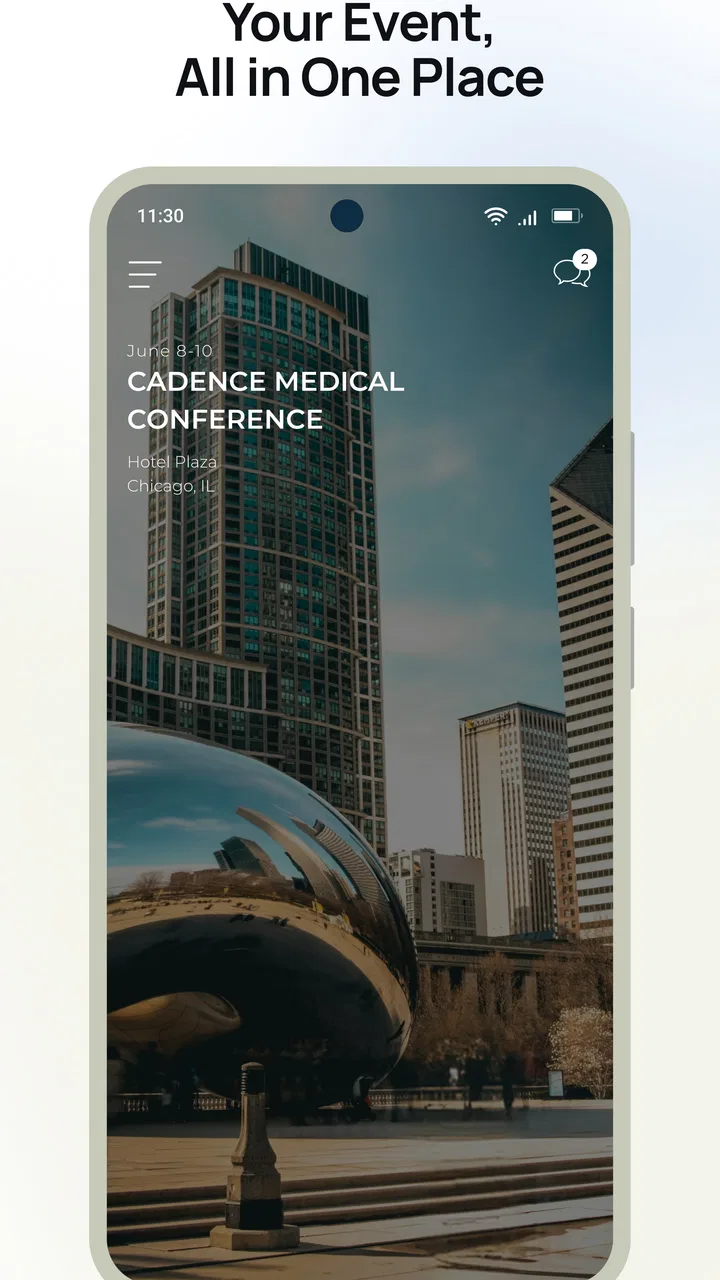
Cadence - Event Experiences
- 3.7
- Rating
- 10.00K
- Installs
- Free
- Price

 Analysis by App-foxy
When I first opened Cadence - Event Experiences, I approached it less like a general calendar and more like a tool for shaping an event around the people attending it. That distinction matters. This is an Events app from Event Cadence, Inc., and its purpose is to help create memorable, engaging event experiences rather than simply record an appointment. If you are planning something where atmosphere, participation, and the way guests move through the occasion matter, Cadence is worth exploring.
The app is free and suitable for everyone, which makes it easy to try without turning the first experiment into a financial commitment. Its store summary focuses on creating events people will remember, and that ambition comes through in the way the app is positioned. I would not install it expecting a replacement for every calendar, ticketing platform, or group-chat service. I would install it when the event itself needs more thought than a date, time, and address.
My overall impression is positive but specific: Cadence can be useful when an organizer wants to design an experience, not just announce one. It is less compelling for a quick coffee meetup or a private reminder. The best results come when I already know what I want guests to feel and do, then use the app as a place to organize that intention.
You May Also Like

 Blood Strike: 2.5 Anniversary
Blood Strike’s Loadouts Turn Every Drop Into a Tactical Gamble
A close look at Blood Strike’s custom loadouts: how fast access to signature weapons reshapes its battle royale rhythm, rewards preparation, and narrows the gap between fights.

 Pandora - Music & Podcasts
Pandora’s Music Is Easy to Start, but Harder to Recover
Pandora’s strength is its low-effort path from a seed to a station. Its weak spot is how much confidence it asks you to place in connection, setup, and quiet recovery.

 8 Ball Pool
 Is Built on Rivalries, Rematches, and Routine
A close look at the rivalries, rematches, shared routines, and unanswered safety questions that turn a quick pool match into a persistent mobile community.

 Samsung Music
’s Quiet Strength Is Playing What You Already Own
Its reach comes less from spectacle than from dependable access to a personal library. That simplicity is both the app’s strongest retention engine and its ceiling.

 AccuWeather: Weather Radar
AccuWeather Review: A Quick, Clear Forecast for Everyday Decisions
For everyday plans, the best forecast is the one you can understand quickly. AccuWeather makes rain timing, radar, and local conditions easy to act on, with a few trade-offs.

 Hill Climb Racing
Why Hill Climb Racing Still Turns Crashes Into One More Run
A tiny car, a bumpy hill and one more upgrade: Hill Climb Racing keeps resurfacing because its simple chaos makes every near-miss feel personal.
More From Our News Desk
View All News


What to expect before creating an event
The first thing to understand is the difference between an event listing and an event experience. A conventional calendar entry answers basic questions: when is it, where is it, and what is it called? Cadence is aimed at the layer around those facts. It encourages the organizer to think about engagement and memorability, so the event can have a clearer identity instead of feeling like an isolated appointment.
That makes it a natural fit for community gatherings, creative activities, social occasions, launches, workshops, and other events where participation is part of the value. I can also see it helping someone who regularly organizes small gatherings and wants a repeatable way to give each one more shape. The app is not only about putting information on a screen; it is about making the event feel intentional from the beginning.
At the same time, expectations should stay realistic. A tool can help structure an experience, but it cannot supply the idea, audience, venue, or energy by itself. If I create a vague event and expect the app to make it exciting automatically, I am likely to be disappointed. Cadence works better when I bring a clear purpose and use the app to express it.
The public response is modest rather than overwhelming: Cadence has an average rating of 3.7 from around forty ratings, with roughly ten reviews. I read that as a reason to approach it with curiosity, not as a final verdict. It has passed the point of being entirely untested, yet the smaller audience means the experience may feel more specialized than the familiar, heavily reviewed event platforms many people already use.
It has also reached over ten thousand installs, which suggests that it is not restricted to a private pilot or a one-off experiment. I still think the right question is not whether it is popular enough in the abstract, but whether its event-focused approach matches the kind of gathering I am trying to create.
Who will get the most from it
I would recommend Cadence first to an organizer who cares about the guest journey. That might be someone arranging a themed social event, a recurring community activity, a creative session, or a gathering where people should feel involved rather than merely present. It is also a sensible option for a first-time organizer who wants to think beyond a basic invitation but does not want to start with a large, complicated professional system.
The app is less suitable if my only need is a shared calendar, a simple reminder, or a fast message to a few friends. In those cases, the calendar already on my phone or a familiar messaging app may be quicker. Likewise, if my event depends on advanced registration, detailed payment handling, formal ticket inventory, or a large operational team, I would compare Cadence carefully with a dedicated event-management platform before committing to it.
That is not a criticism so much as a useful boundary. Cadence appears strongest at the experience layer. It should not be judged as though it were trying to be every event tool at once.
Starting setup without overcomplicating the idea
After installing the app, my advice is to begin with one real event rather than exploring every possibility at once. Pick something with a clear audience and a straightforward purpose. “A relaxed evening for local makers” is a better starting point than “a great event for everyone,” because the first description gives me a direction for the tone and content.
Before entering anything, I would write down three answers: what should attendees understand immediately, what should they do during the event, and what should they remember afterward? These questions are more useful than trying to make the event sound impressive. They give Cadence a job to perform and prevent the setup from becoming a collection of attractive but disconnected details.
One practical tip is to separate essential information from atmosphere. The essential layer includes the event identity and the information someone needs to decide whether to attend. The atmosphere layer explains why the occasion is worth their time. Keeping those apart helps me avoid burying the important details inside enthusiastic wording.
I also recommend drafting the event in plain language before polishing it. If I cannot explain the gathering to a friend in a few sentences, the problem is probably the event concept rather than the interface. Cadence can help present an idea, but it cannot resolve an unclear one.
The app is free, so the first setup is low-risk in financial terms. I can test a small event, see how the presentation feels, and decide whether it suits my audience. That is particularly helpful for someone who has never used an experience-focused event app and is unsure whether the extra planning will be worthwhile.
Build around one meaningful action
A useful way to avoid a flat event is to choose one action that makes attendance feel worthwhile. It could be meeting a particular group of people, taking part in a guided activity, sharing work, discovering something new, or contributing to a conversation. I would make that action central instead of adding many unrelated ideas.
This is one of the less obvious strengths of Cadence’s concept: it pushes me to consider engagement before decoration. Many event tools make it easy to enter logistics, but they do not necessarily encourage me to decide what guests should actually experience. Here, the planning mindset is part of the value.
There is also a trade-off. A more thoughtful event takes more time to prepare than a basic calendar entry. If I am organizing something casual at short notice, that extra effort may not pay off. If the event is important enough that people will remember how it felt, the additional planning becomes much easier to justify.
Reaching the first successful result
For a first meaningful success, I would create a small event with a single clear purpose and then review it from an attendee’s point of view. I would ask whether the name communicates the occasion, whether the main idea is obvious, and whether the event feels inviting without making promises I cannot keep. This review step is more valuable than endlessly editing individual words.
A realistic example would be a neighborhood creative evening. Instead of presenting it as a generic meetup, I would define the experience: people arrive, take part in a simple shared activity, and leave having met others who enjoy the same subject. The event information should support that journey. Cadence becomes useful because I am not merely publishing a time; I am giving the gathering a reason to exist.
My first successful action would be reaching a point where another person can understand the event quickly and explain why they might want to attend. That is a better measure than whether the setup looks elaborate. If a friend reads the event and asks an interested, practical question rather than “What is this supposed to be?”, the structure is doing its job.
For organizers, I suggest testing the event with one trusted person before sharing it widely. Ask them to describe the event back to you using only what they saw. If they miss the main activity or misunderstand the audience, revise the presentation. This small test catches a common problem: organizers know their own intention so well that they overlook what a newcomer cannot infer.
Another useful workflow is to plan the follow-up while creating the event. What should happen after someone attends? Even a simple thank-you, reflection, or invitation to continue the conversation can make the event feel complete. I would not add a follow-up merely for appearance, but I would consider it whenever the gathering is meant to build an ongoing community.
How it compares with familiar alternatives
Compared with a standard calendar, Cadence is more suitable when the emotional and participatory side of an event matters. A calendar is excellent for personal scheduling and quick coordination; it is not designed to help me think through the guest experience. Compared with a group chat, Cadence offers a more focused event context, while a chat is usually better for fast conversation and informal updates.
Dedicated ticketing and event-management services may be stronger for large public events, payments, capacity control, or formal administration. Their advantage is operational depth. Cadence’s appeal is that it keeps attention on the event as an experience. For a small or medium gathering where the concept and presentation are more important than complex infrastructure, that difference can be meaningful.
I would also compare it with a social network event feature. Those tools may provide a larger built-in audience, but they can make an event feel like another item in a busy feed. Cadence is more appealing when I want the event itself to have a deliberate identity rather than relying entirely on a platform’s surrounding social activity.
Common confusion and practical limitations
The most likely confusion is expecting Cadence to create engagement automatically. The app can support a thoughtful event, but the organizer still needs to define the audience, purpose, and activity. If the event is only a title and a time, the experience will remain thin no matter how it is presented.
Another possible friction point is deciding how much detail to include. Too little information leaves people uncertain; too much can make the event feel like homework. I would prioritize the details that affect a decision to attend, then add only information that helps people participate comfortably. This is especially important for first-time users, because adding content can feel productive even when it makes the central idea harder to find.
The app’s smaller rating base also means I would not assume that every workflow has been shaped around my exact type of event. My approach would be to test the whole process early: create a sample event, view it as a participant would, and check whether the result matches the tone I want. A short trial is more informative than relying on assumptions based on the category alone.
There is a practical trade-off between Cadence and the usual all-purpose tools. A calendar may be faster, and a messaging app may already be where my audience spends time. Asking people to engage with a separate event experience can add a small amount of friction. I would use Cadence when the improvement in clarity and memorability is worth that extra step.
The age rating is Everyone, so the app is positioned broadly rather than for a narrow adult-only audience. Even so, the suitability of a particular event depends on the organizer’s content and audience. I would still review the event wording carefully, especially when inviting families, schools, or mixed-age groups.
Taking the next step after the first event
Once the first event is shaped, I would resist the temptation to make the next one larger immediately. Instead, I would note where people hesitated, what they asked repeatedly, and which part of the experience generated the most interest. Those observations can guide the next event more effectively than adding more features or more text.
A strong second use is to create a series with a recognizable purpose. The key is consistency without repetition. Each event should have its own reason to attend, while the broader series gives people confidence about what kind of experience they will receive. Cadence is potentially valuable here because its focus encourages me to think about the event as a continuing relationship rather than a single announcement.
I would also use the app as a planning checkpoint for collaborators. Before sharing an event publicly, everyone involved should agree on the audience, the central activity, and the promise being made. This can prevent a common failure in group planning, where the organizer describes one experience and the venue, host, or contributors imagine another.
For a first-time user, the safest path is simple: install the free app, choose one real gathering, define one meaningful participant action, build the event around that action, and test the result with someone who was not involved in planning. That process gives me a useful answer quickly. Either Cadence makes the event clearer and more engaging, or I learn that a simpler tool is enough.
The current version is 2.7.428 and requires Android 7.0 or later, details worth checking before installation on an older device. The app was released in May 2017 and is developed by Event Cadence, Inc., so it has been available long enough to establish a recognizable identity while still feeling more specialized than the biggest event platforms.
My final recommendation is conditional but genuine. I would suggest Cadence to someone who wants to turn an event from a basic appointment into a more considered experience, especially when participation and atmosphere matter. I would skip it for a simple reminder, a quick private plan, or a complex ticketed operation that needs specialized administration. Its real value appears when I have a clear idea to communicate and want guests to remember more than the date.
That makes Cadence a useful option for thoughtful organizers, not a universal replacement for every event app. Used with a focused concept and a willingness to test the attendee’s perspective, it can help a first event feel intentional without requiring a large budget or an elaborate system.
FAQs for Cadence - Event Experiences
01What is Cadence - Event Experiences used for?
Cadence - Event Experiences is a versatile application designed to enhance event management and participation. Whether you're hosting a conference, workshop, or corporate event, Cadence provides tools for scheduling, networking, and real-time updates, ensuring a seamless experience for both organizers and attendees.
02Is Cadence available on both Android and iOS platforms?
Yes, Cadence - Event Experiences is available for download on both Android and iOS devices. This cross-platform availability ensures that users can access the app's features, such as event agendas and attendee networking, regardless of their preferred mobile operating system.
03Does Cadence offer offline functionality?
Cadence provides limited offline functionality, allowing users to access previously downloaded event schedules and information. However, for the most interactive experience, including real-time updates and networking features, an internet connection is recommended.
04How secure is the data shared on Cadence?
Cadence prioritizes user data security by implementing robust encryption and privacy measures. The app ensures that personal information and event details are protected, giving both organizers and attendees peace of mind regarding data safety.
05Can Cadence be customized for different types of events?
Absolutely, Cadence is highly customizable to suit a variety of events. Organizers can tailor the app's features to fit specific event requirements, such as custom branding, agenda layouts, and attendee engagement tools, making it adaptable for diverse events from small workshops to large conferences.
Pros
- Intuitive user interface for easy navigation.
- Seamless integration with calendar apps.
- Customizable event notifications.
- Offline access to event details.
- Supports multiple event types.
Cons
- Limited free features available.
- Occasional sync issues reported.
- Requires constant internet for updates.
- In-app purchases can be pricey.
- Some features hidden in menus.

Cadence - Event Experiences
Gallery